FitFido · Smart Pet Health · 2025
Turning weight management into something a dog owner never has to think about.
Overview
A frictionless feeding experience for busy owners.
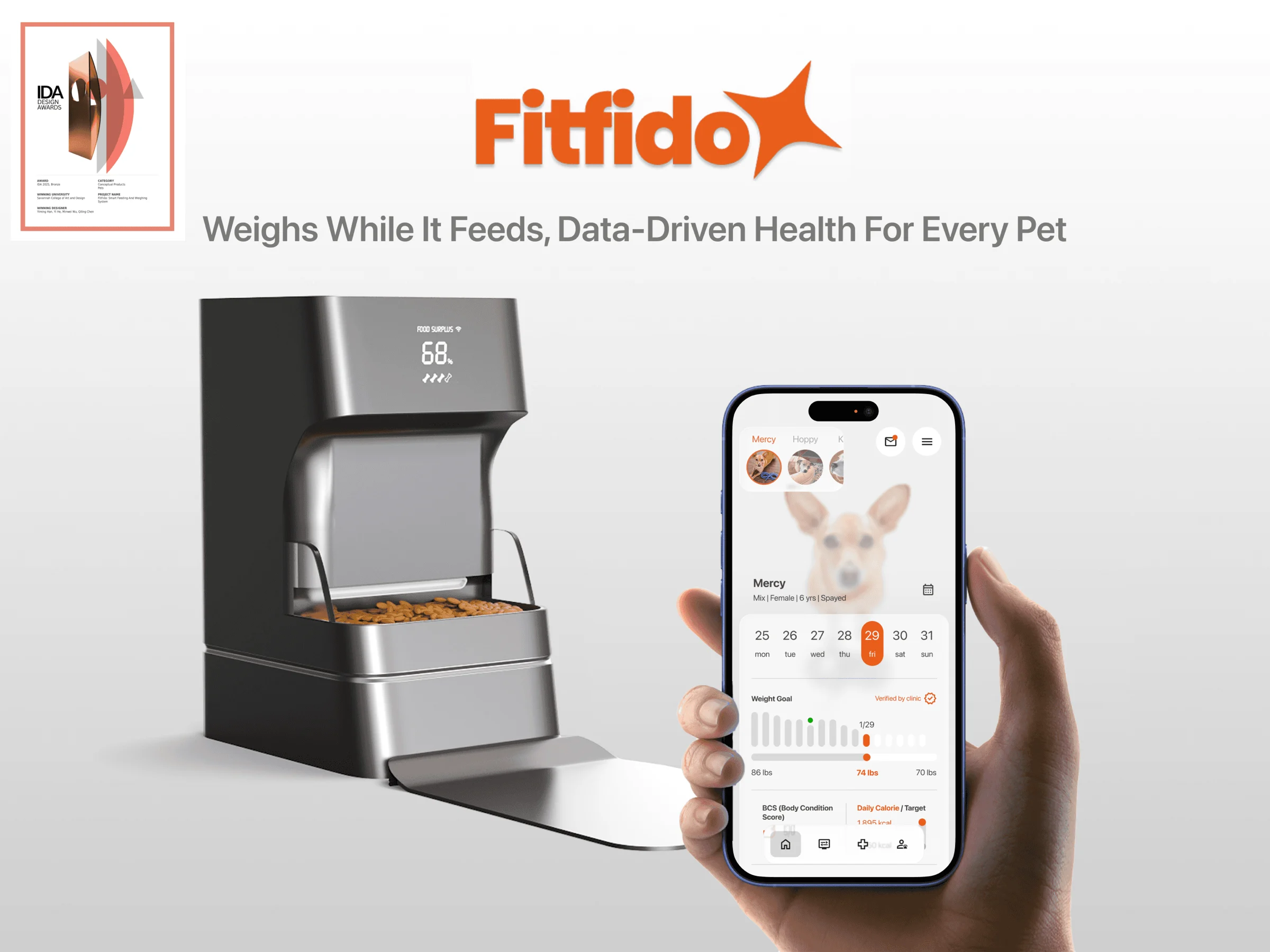
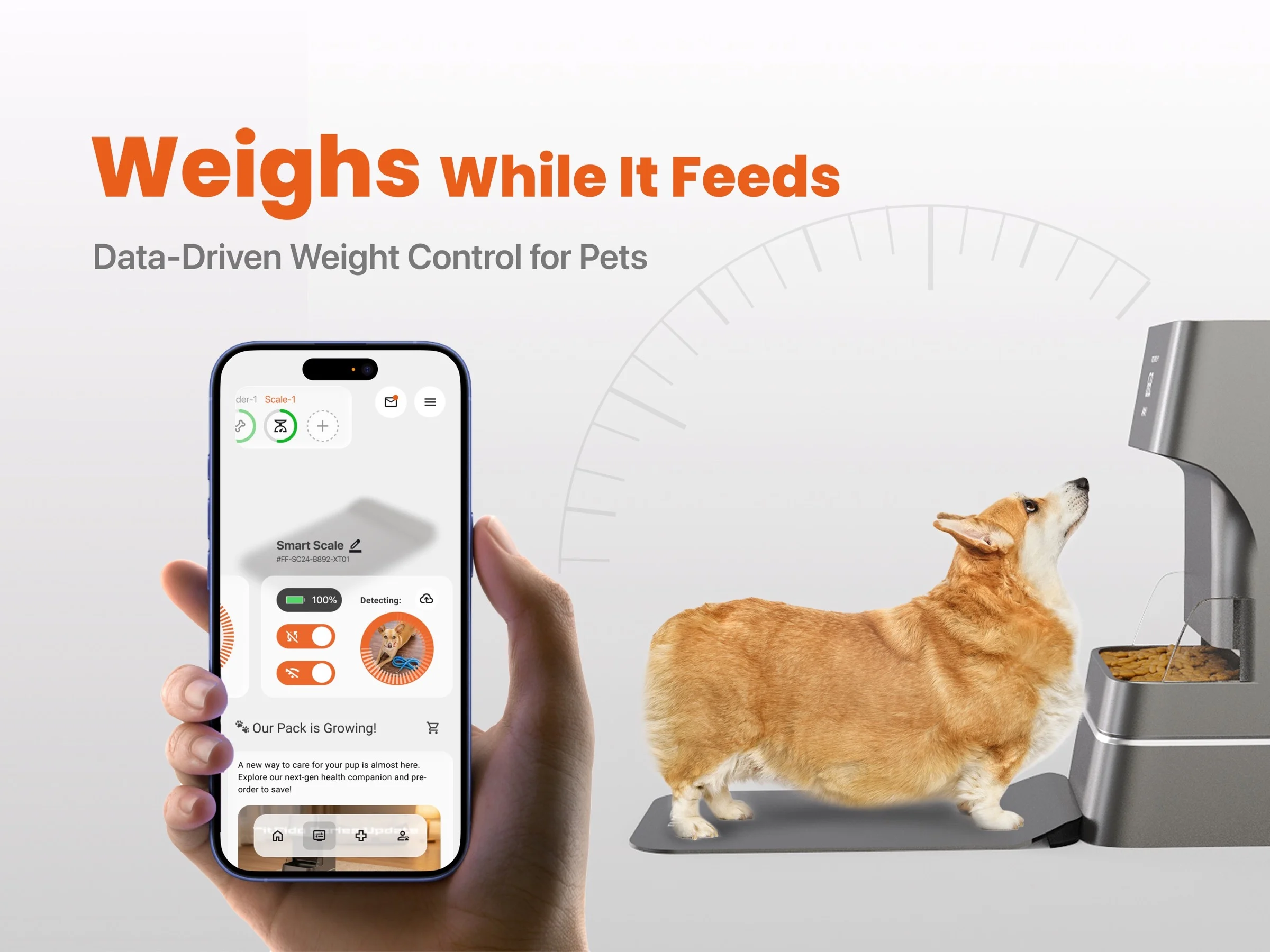
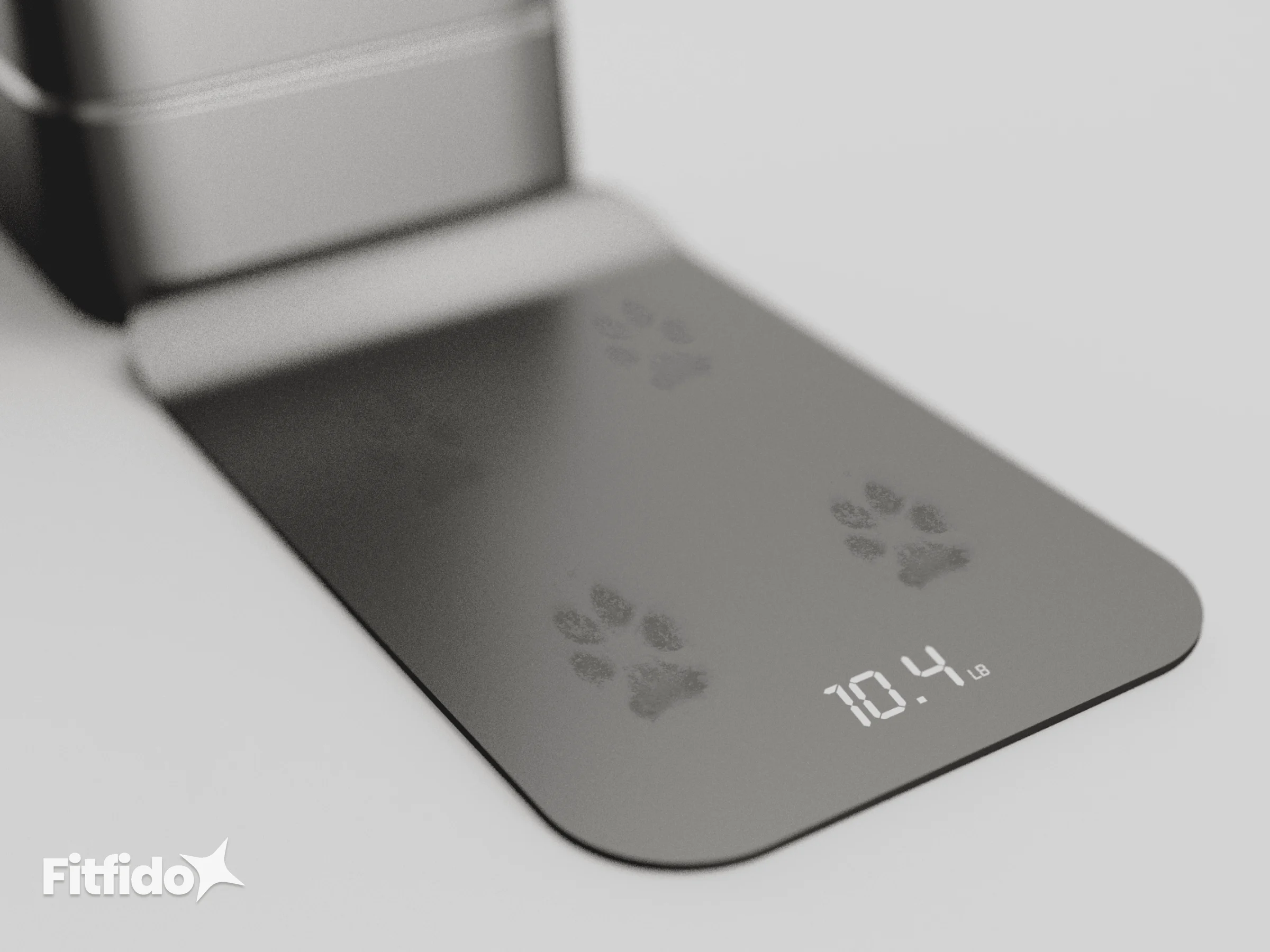
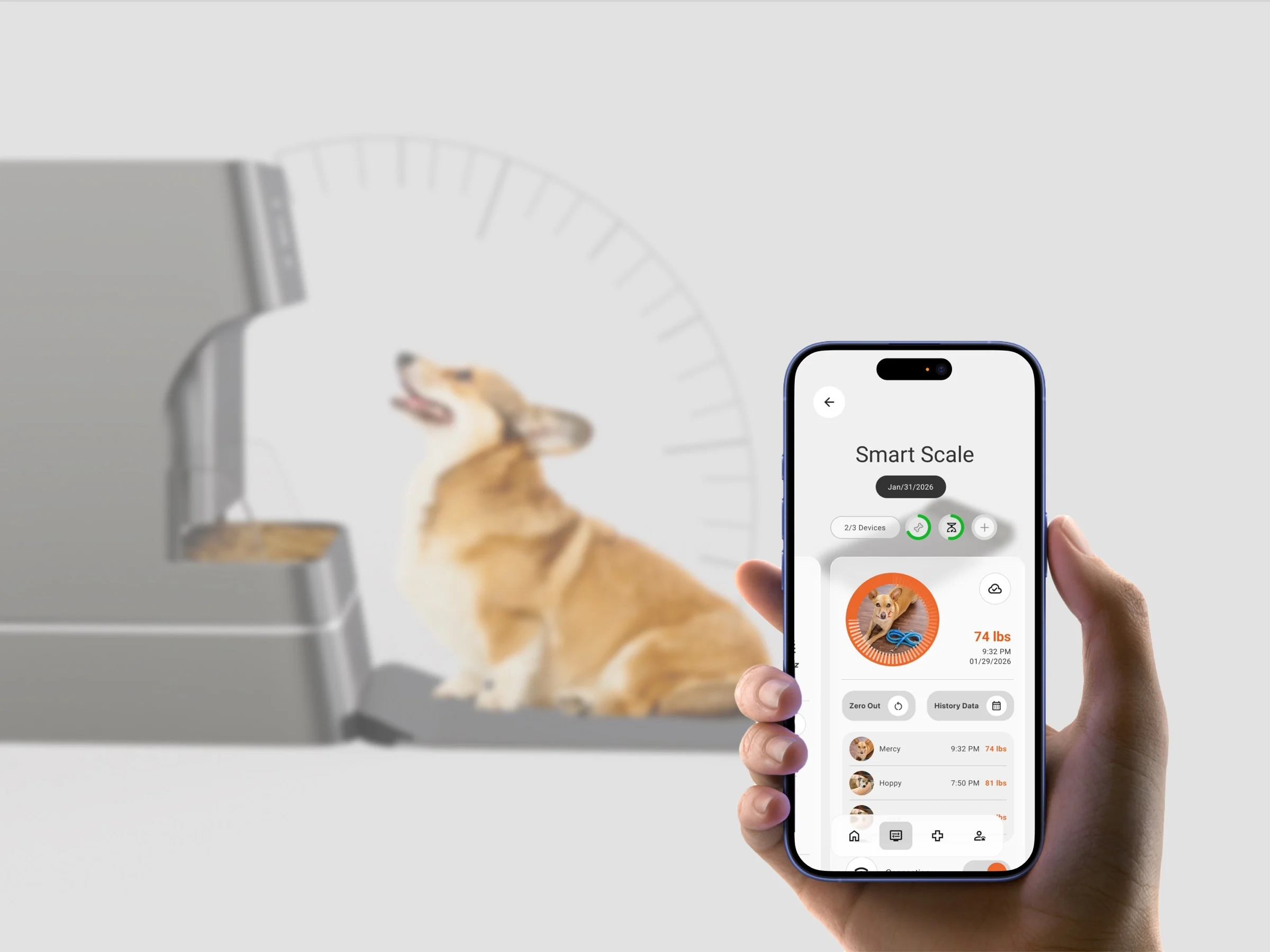
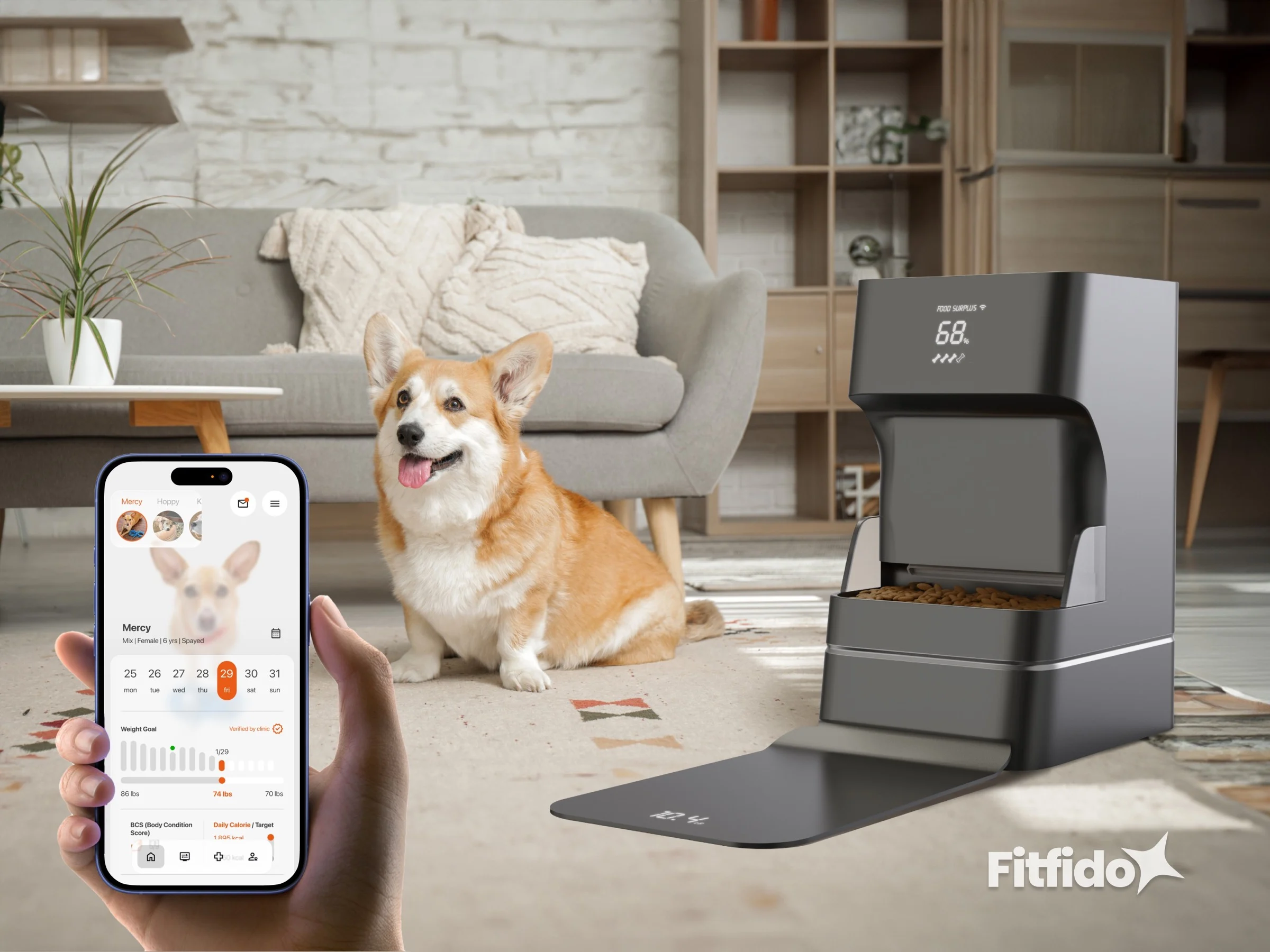
FitFido pairs a smart scale with an automatic feeder, so a dog is weighed at every meal and the portions correct themselves.
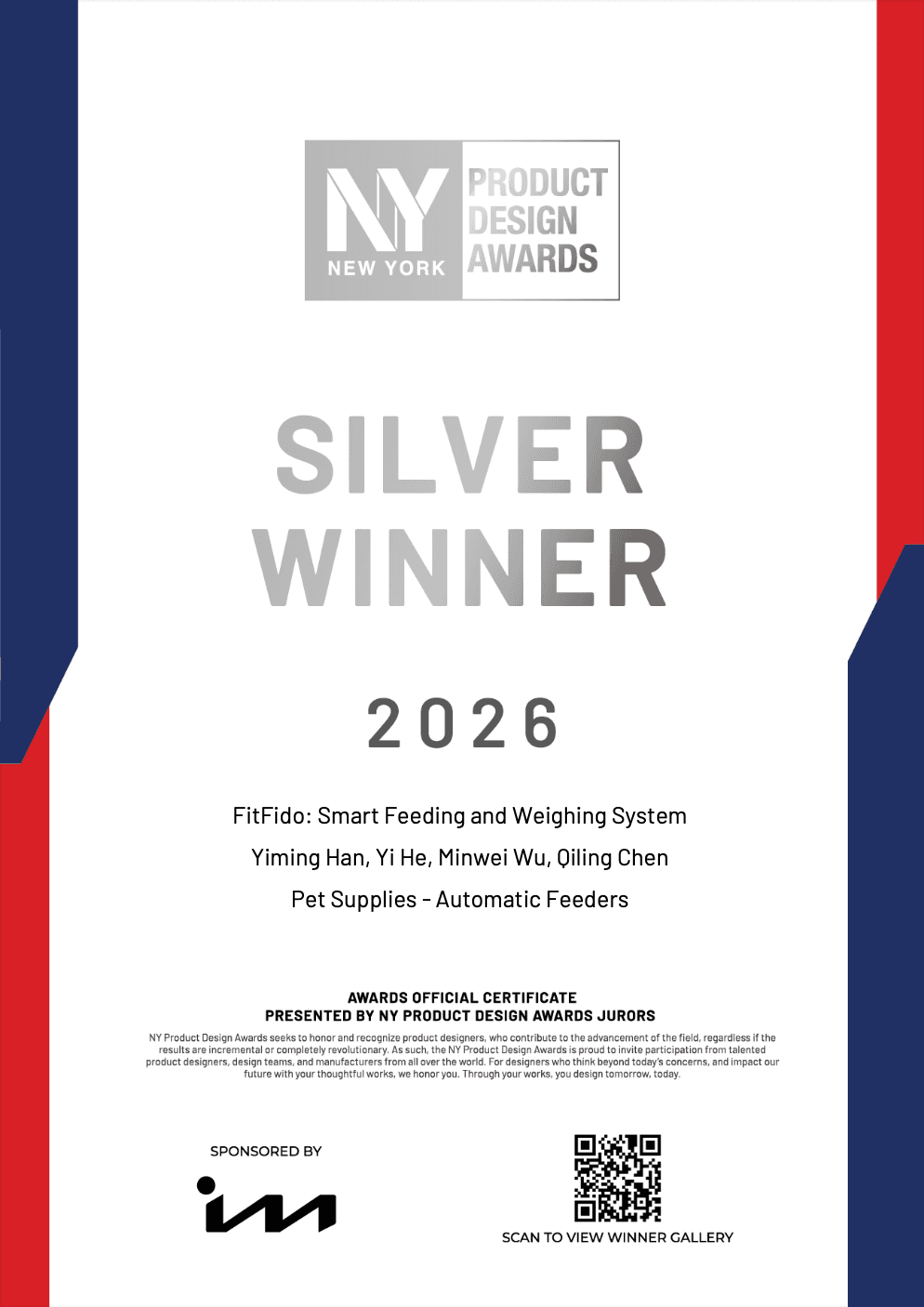
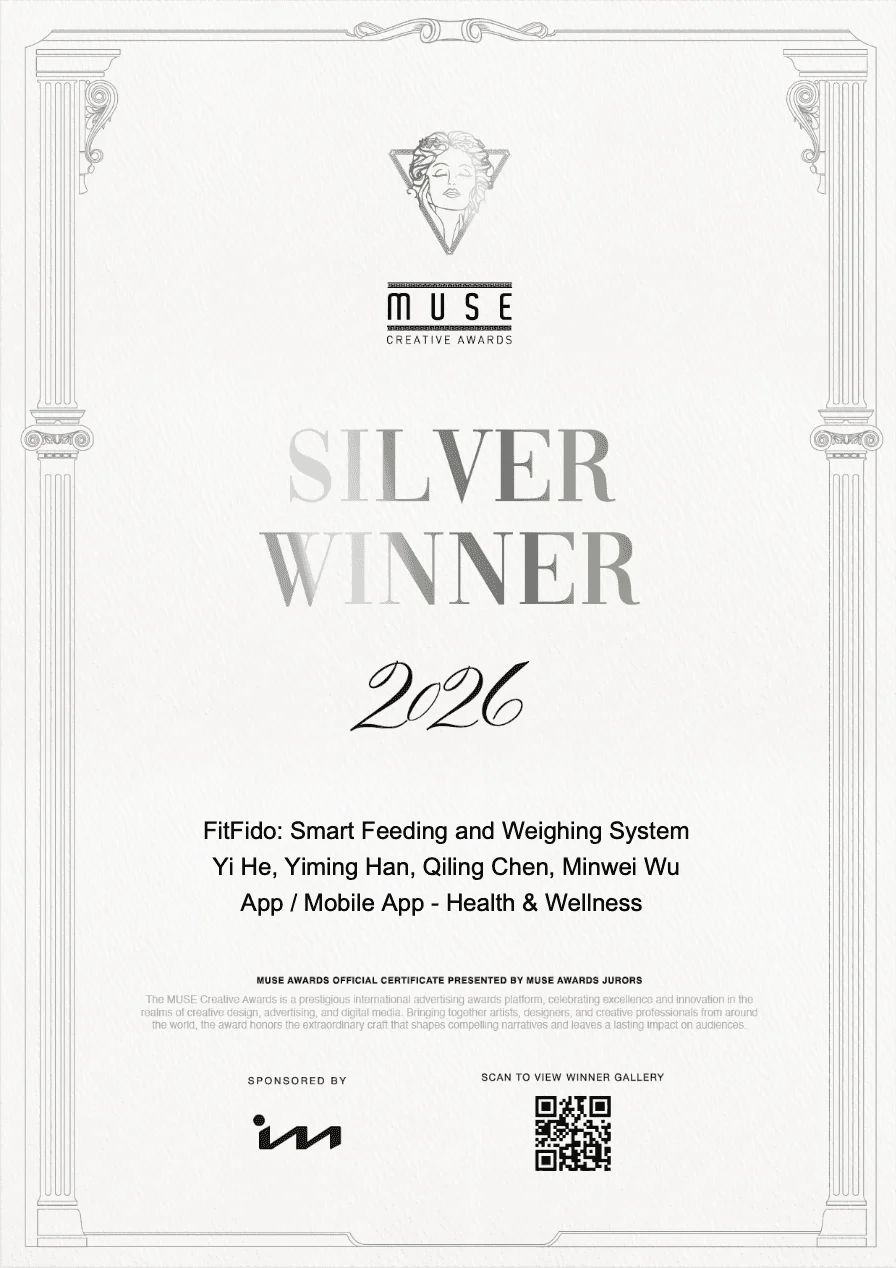
- Recognition
- NY Product Design Award
IDA Design Award
MUSE Design Award - Roles
- UX Design
Prototyping
UX Research - Timeline
- 2 months
- Tools
- Figma
Rhino
Keyshot
Google Form - Team
- Qiling Chen
Minwei Wu
Yiming Han
Yi He
Background
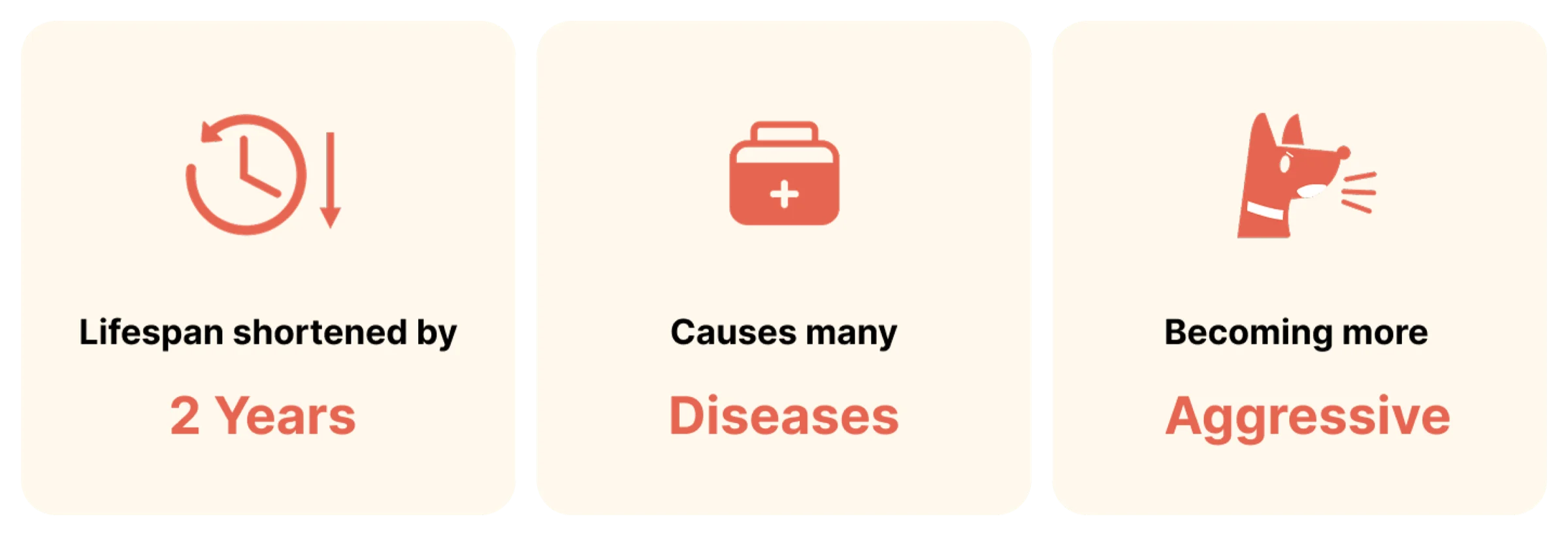
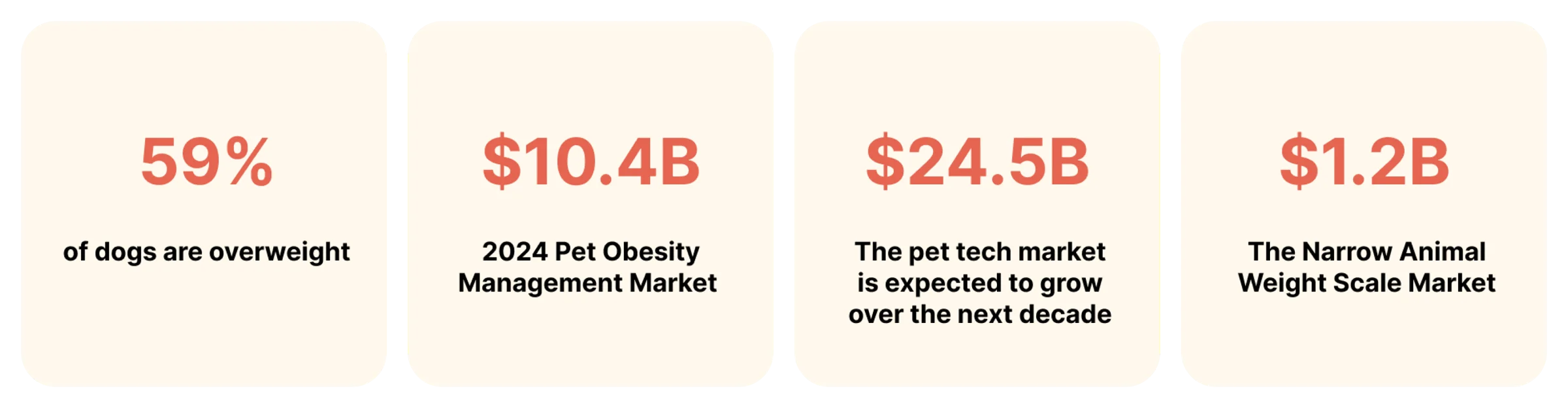
Overweight dogs are common, and owners rarely notice in time.
Pet technology has grown into a large market, but almost none of it reaches the moment the problem starts: the meal.
Research & Insights
Planning our approach.

Step 01
Interview
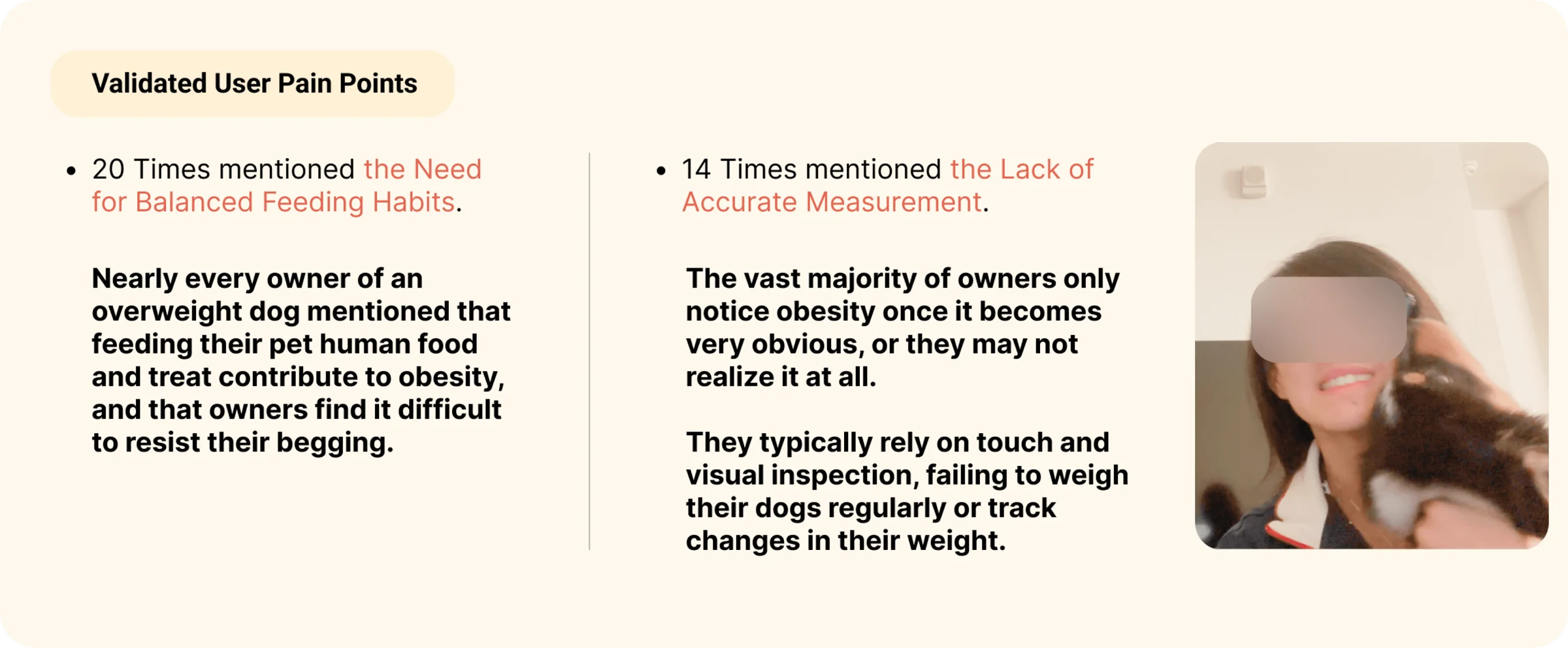
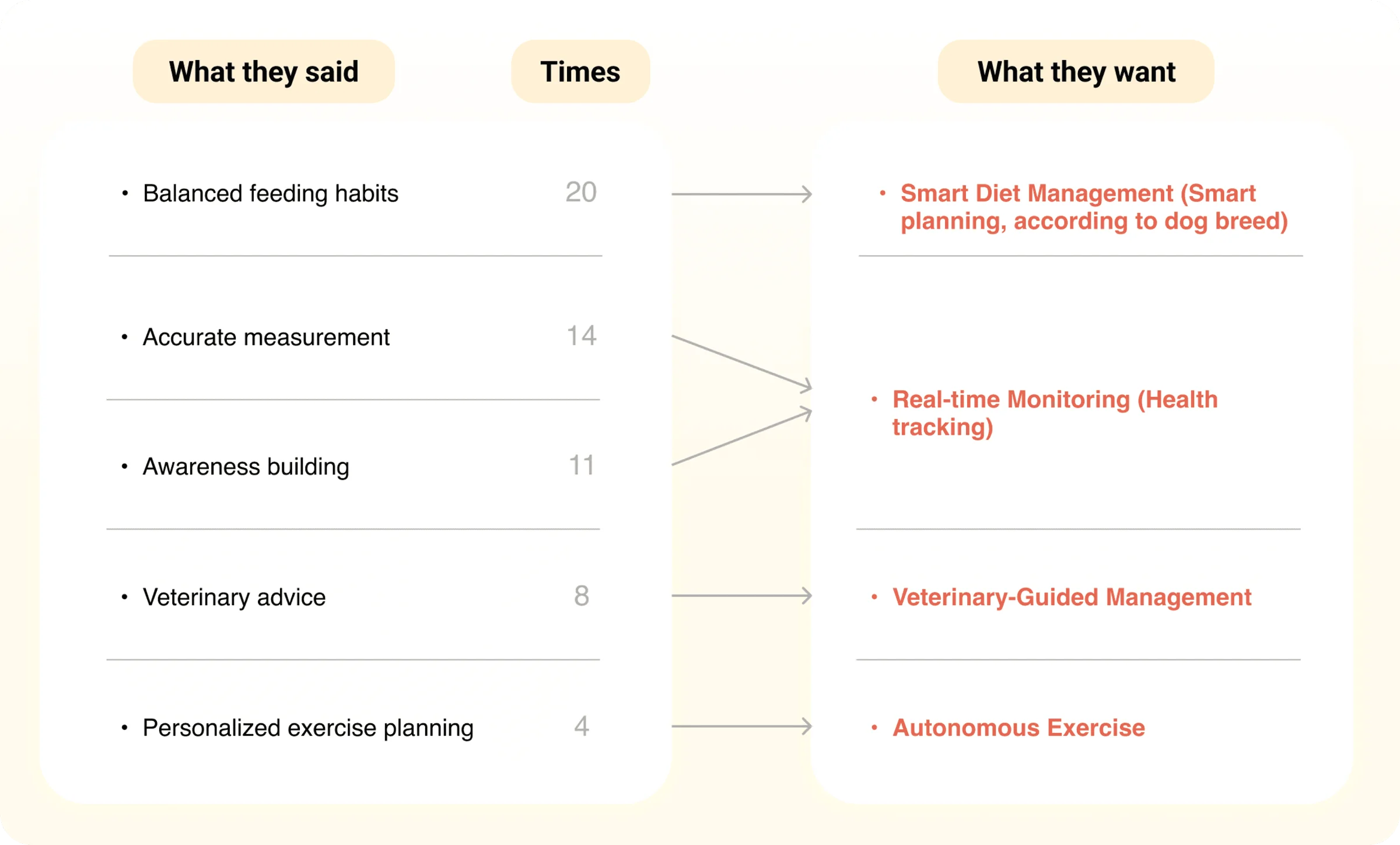
We interviewed 11 dog owners and gained 228 datapoints: 4 whose dogs were obese, 3 whose dogs had been, and 4 whose dogs were not. We performed thematic coding on hours of transcripts, tagging individual user needs to uncover recurring patterns, then sorted those tags into clusters with affinity mapping.
Step 02
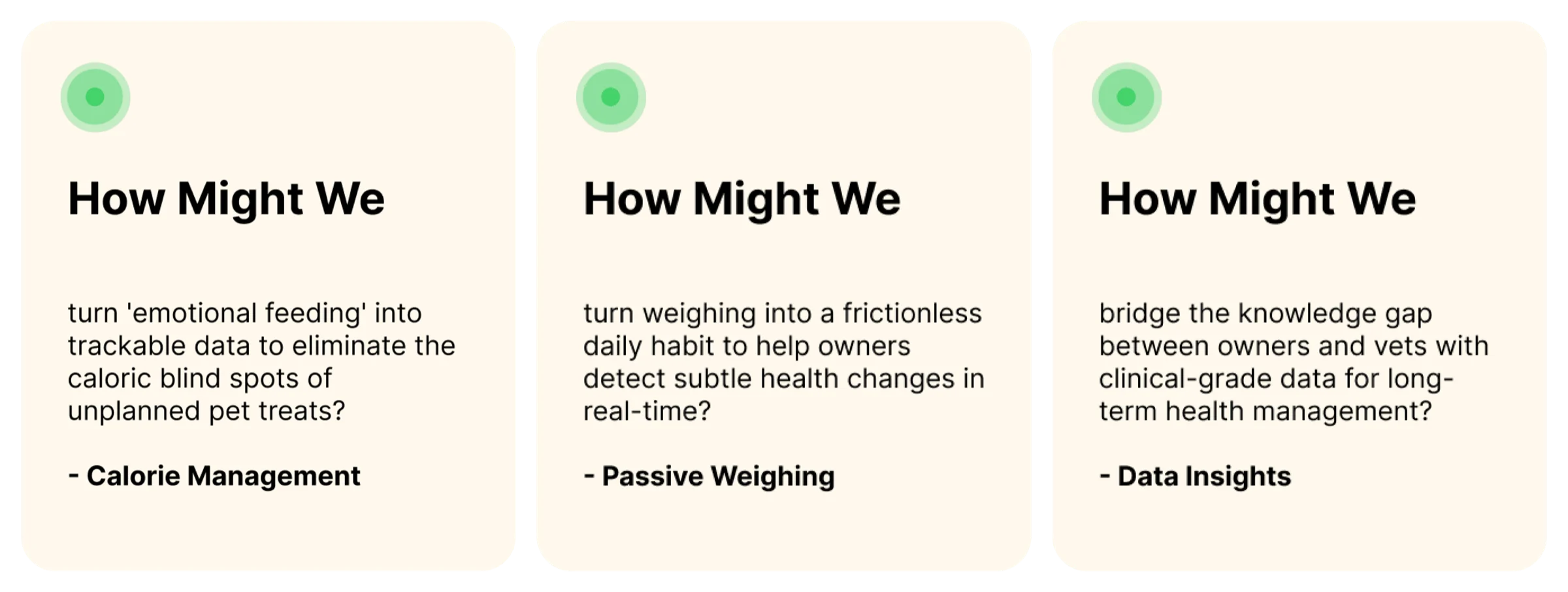
HMW questions
Step 03
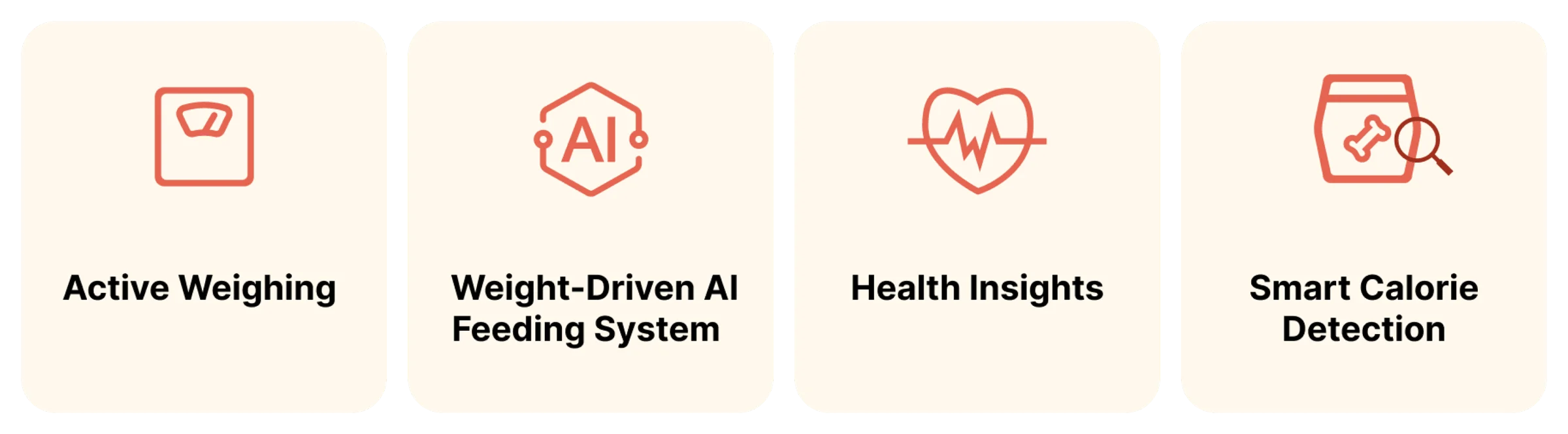
Early feature hypotheses
These came out of the interview insights and the HMW questions, as directions to explore in brainstorming.
Step 04
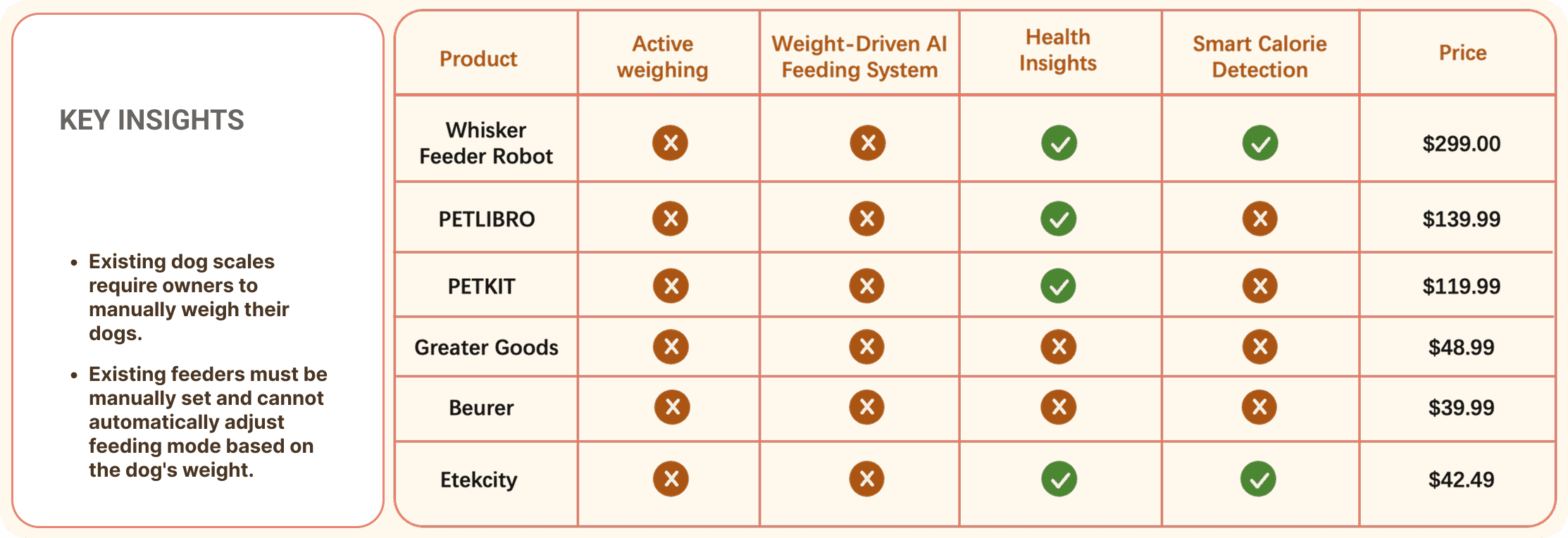
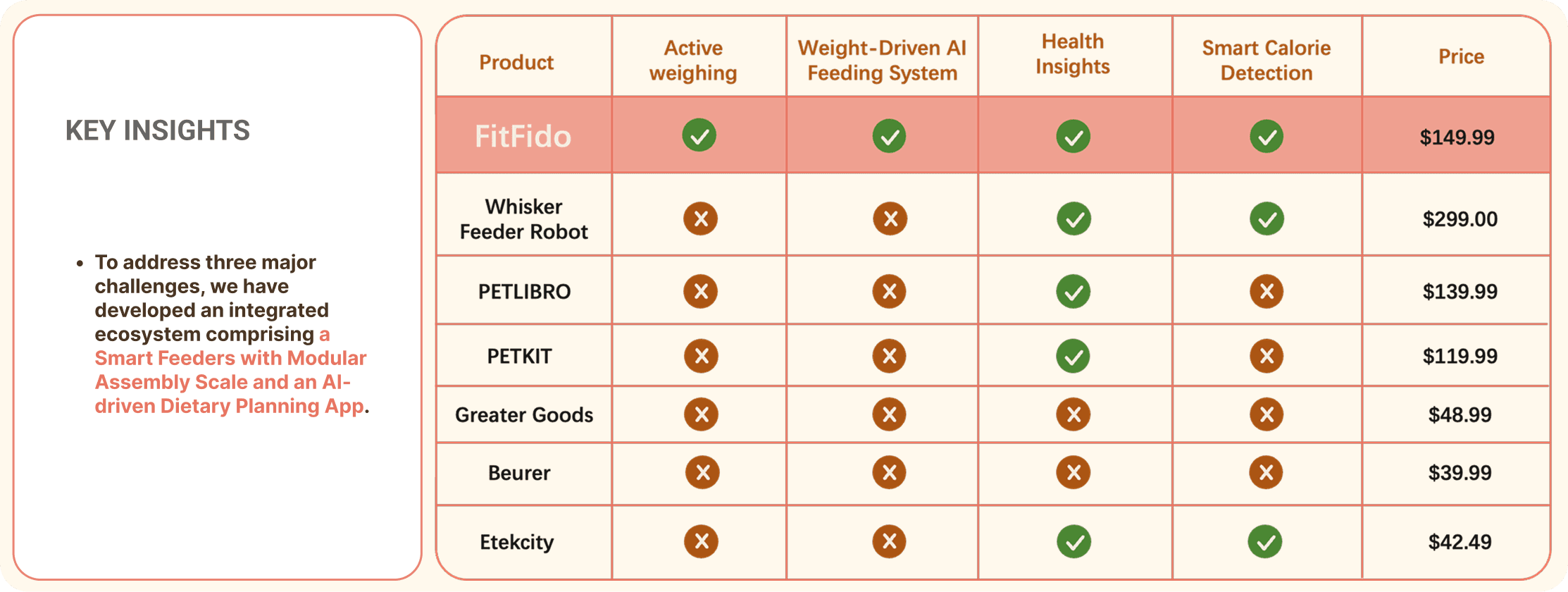
Competitor analysis
We audited the field for gaps, then placed FitFido against it.
Step 05
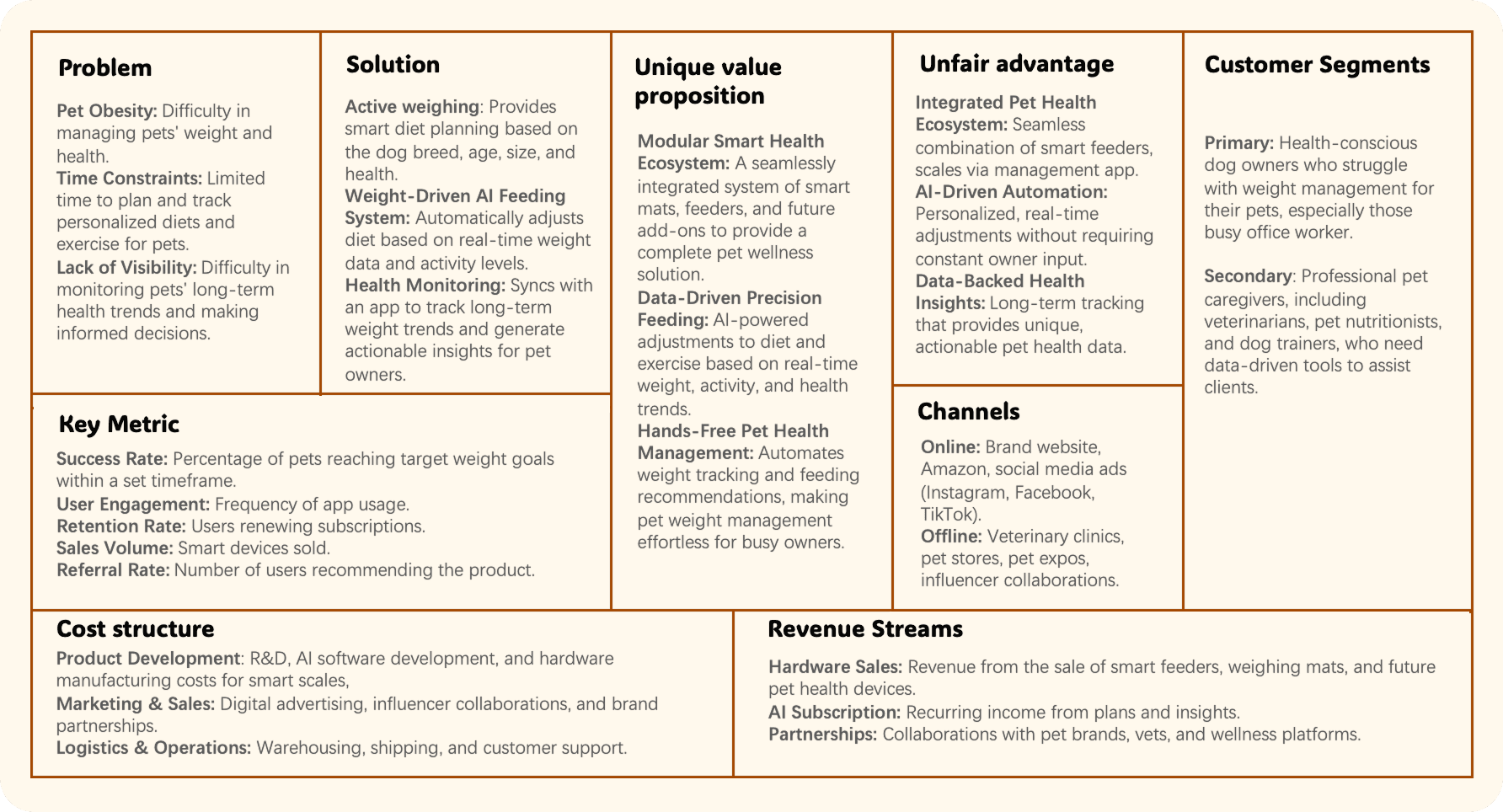
Lean Canvas
We used a Lean Canvas to align the validated user needs with a sustainable product strategy.
Solution
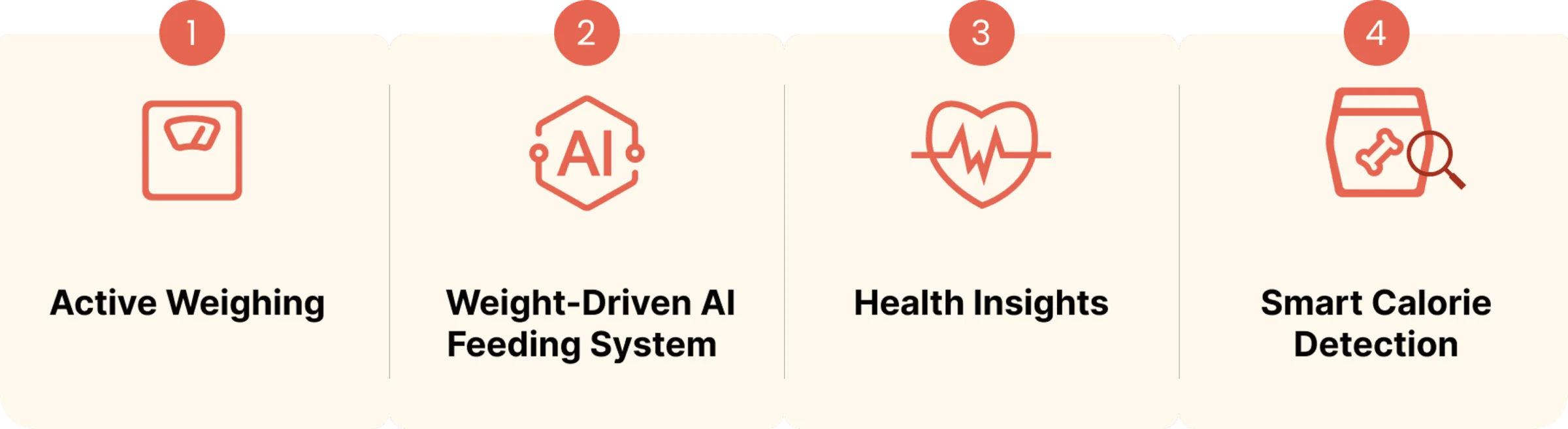
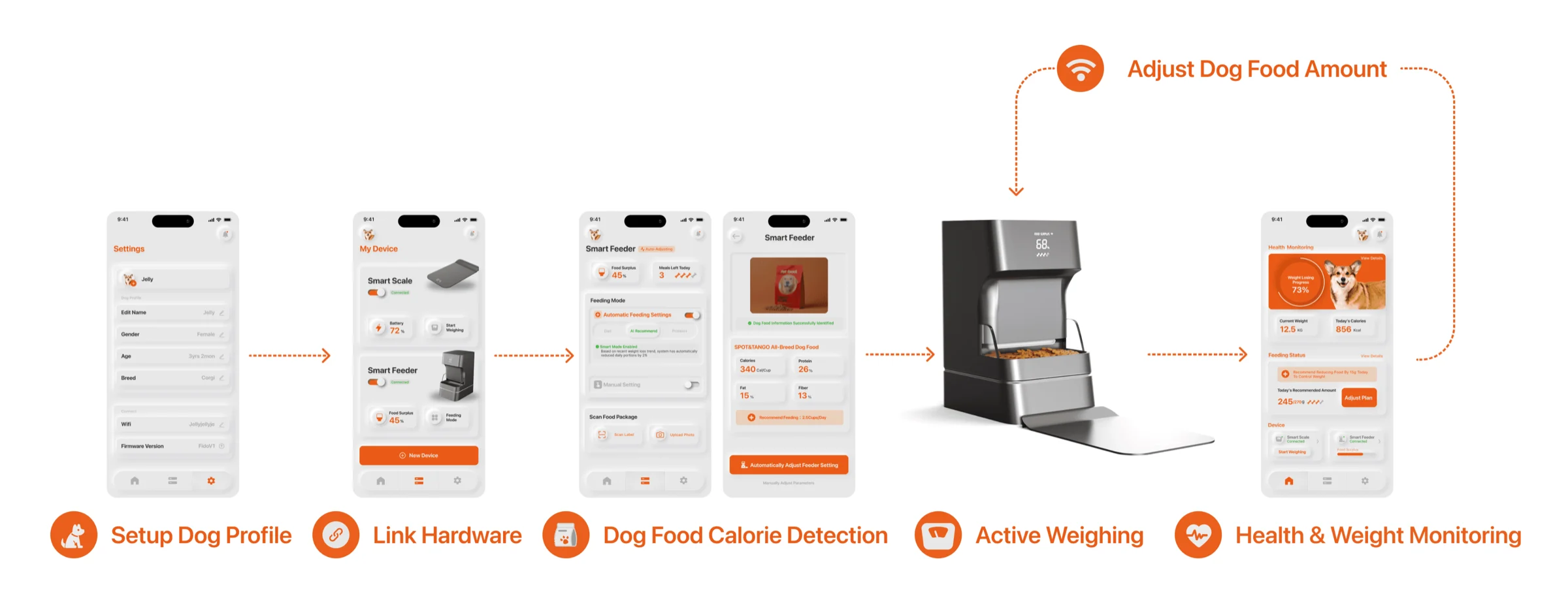
Four features, one loop: weigh, feed, track, adjust.
One number drives the whole system: the weight read at each meal. The other three features close the loop around it.
01
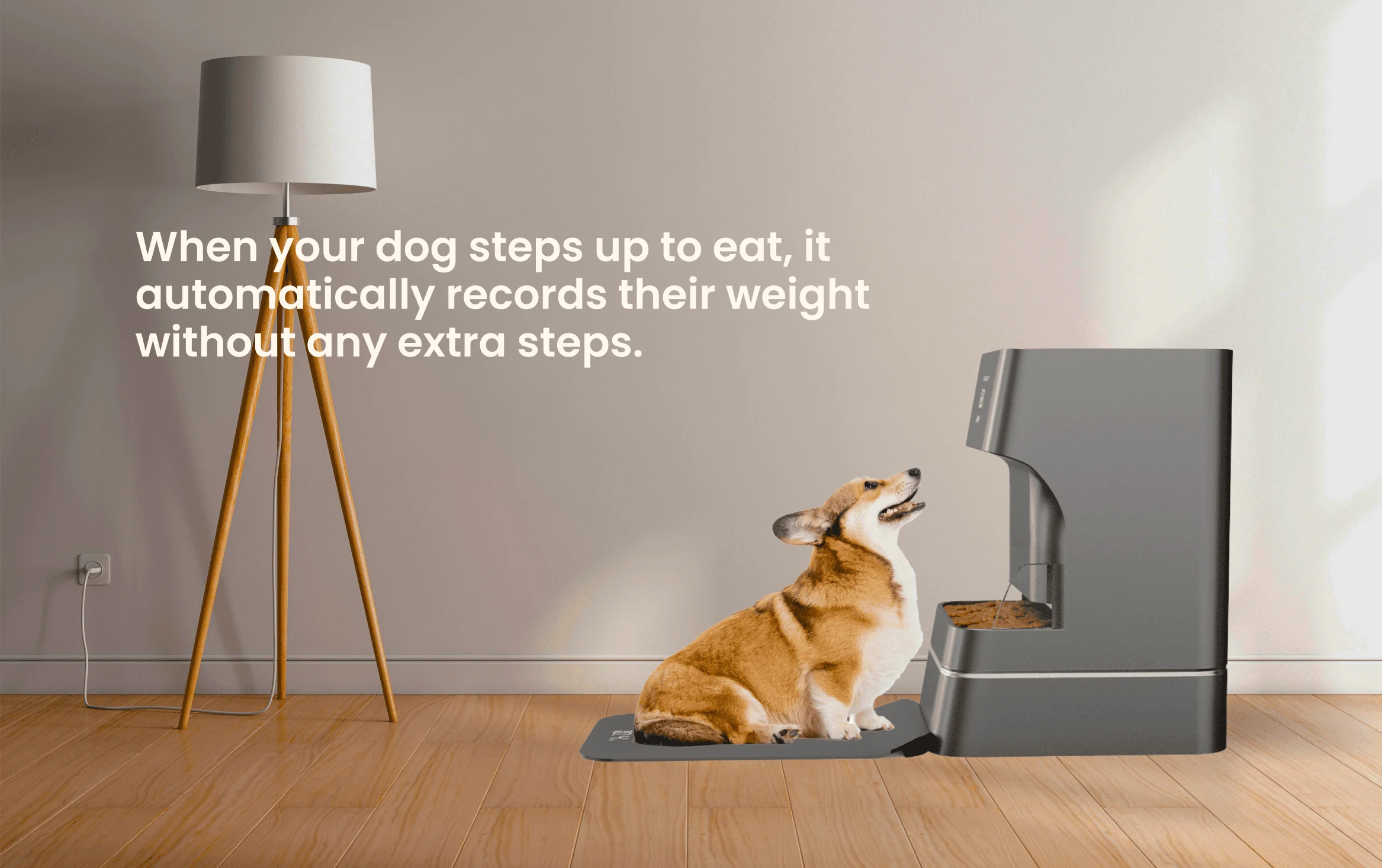
Active Weighing
02
Weight-driven AI feeding system
The smart scale is integrated with the feeder, so the weight it reads becomes the portion it serves.
03
Health insights
Professional-level insight, and a system that can synchronize with vets and hospitals.
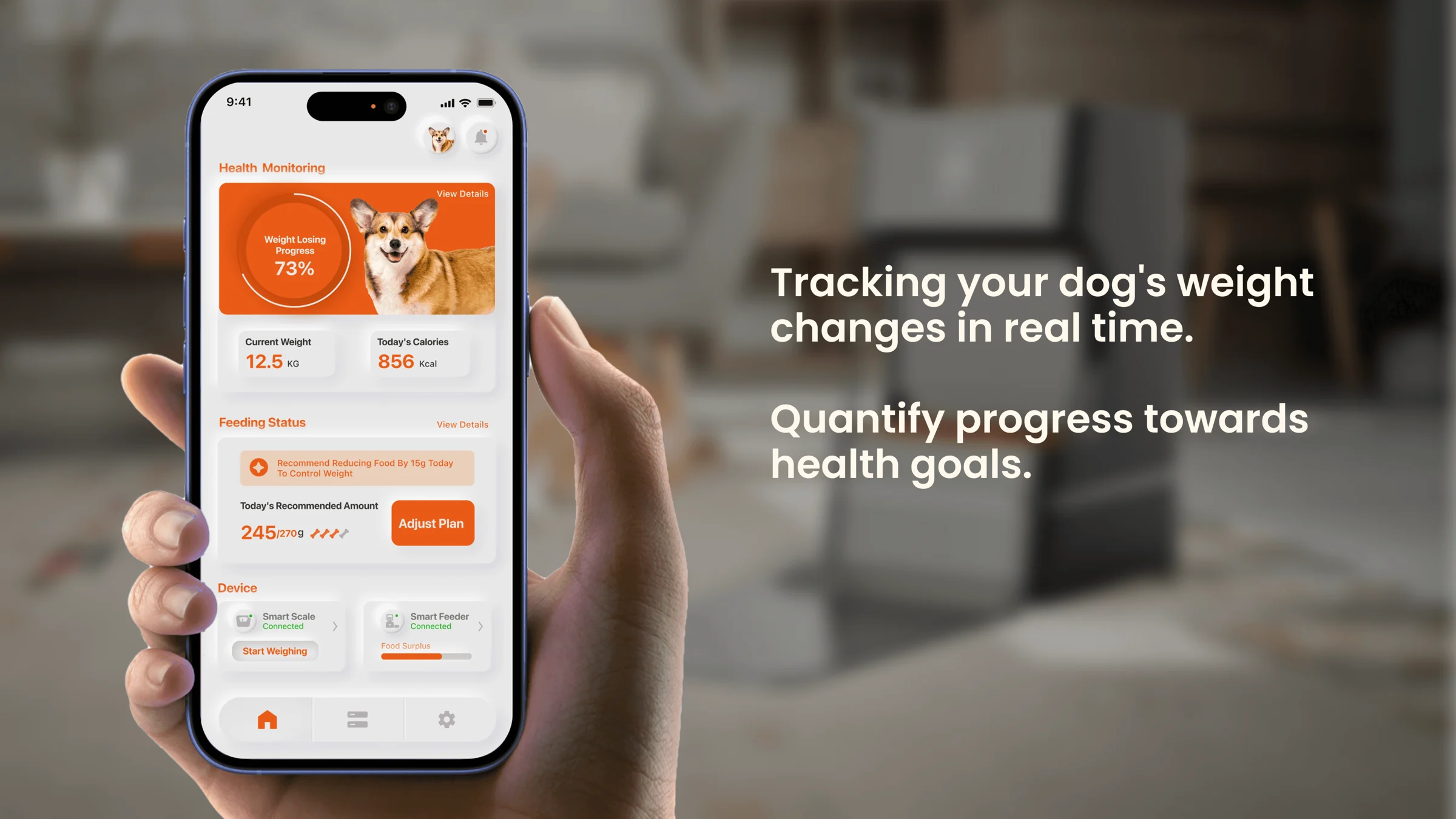
04
Smart calorie detection
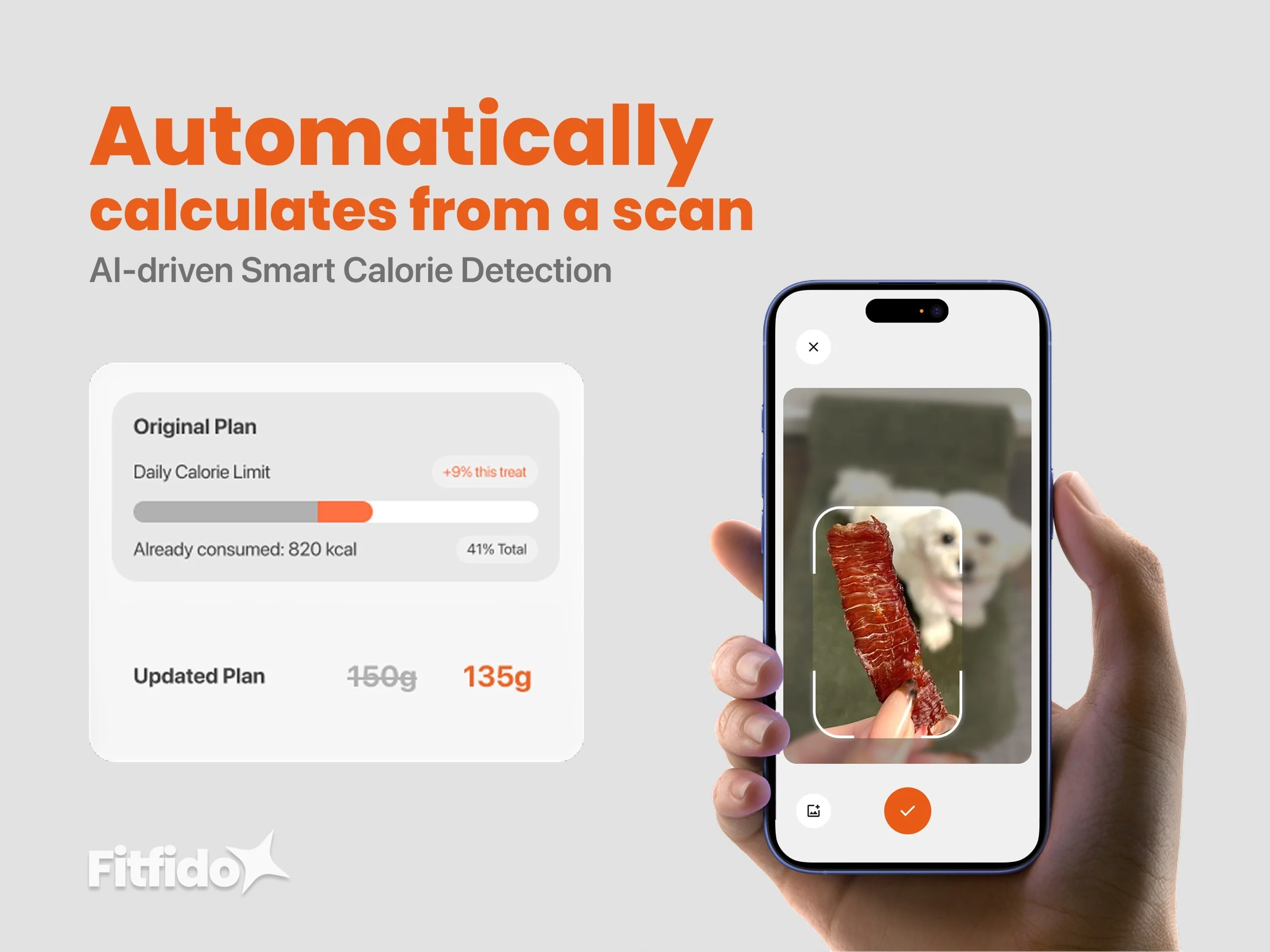
Owners scan or photograph the dog food in the app; AI recognition identifies the calories and folds them into the feeding plan.
User flow
Iteration
From first pass to final interface.
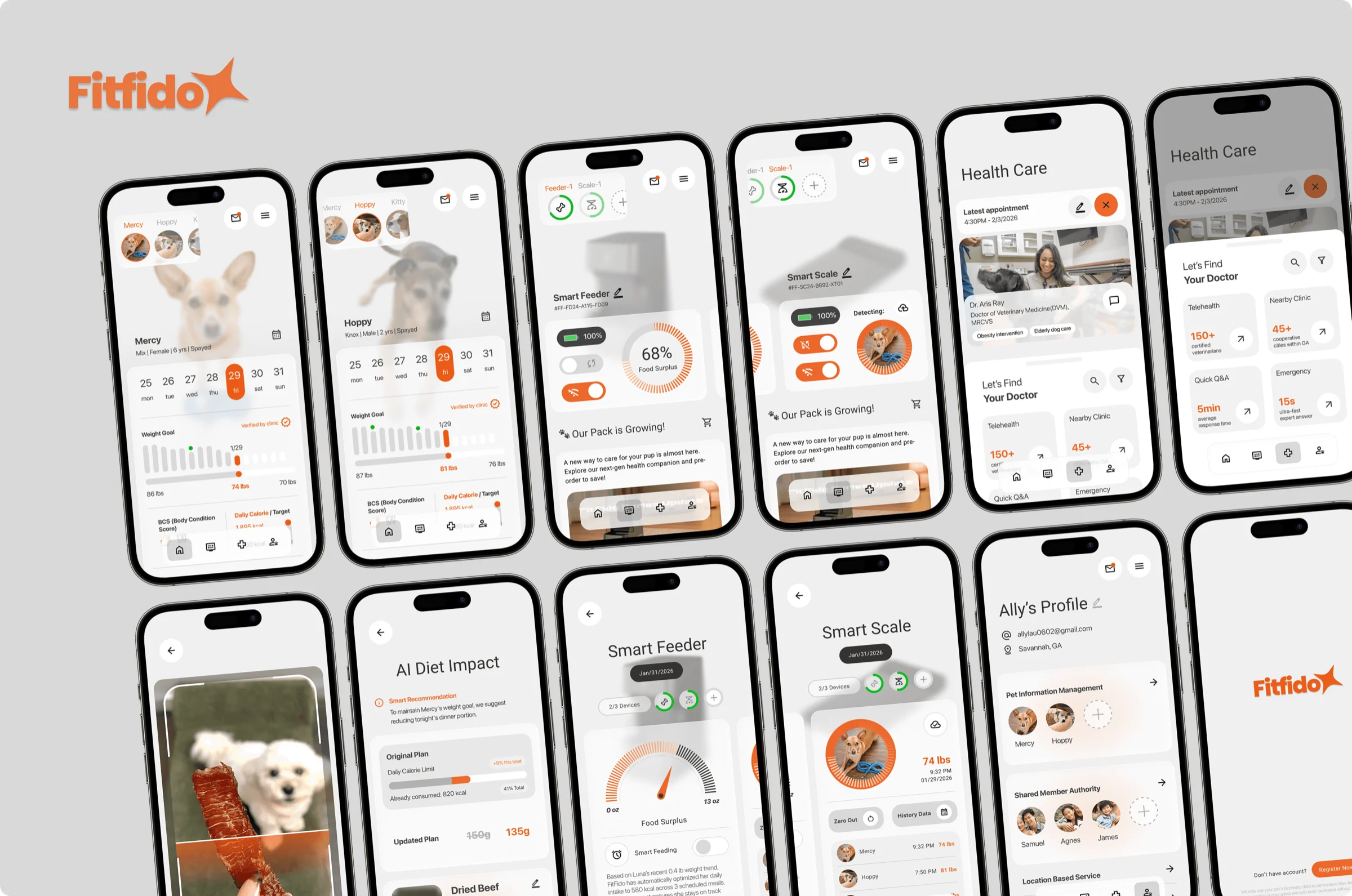
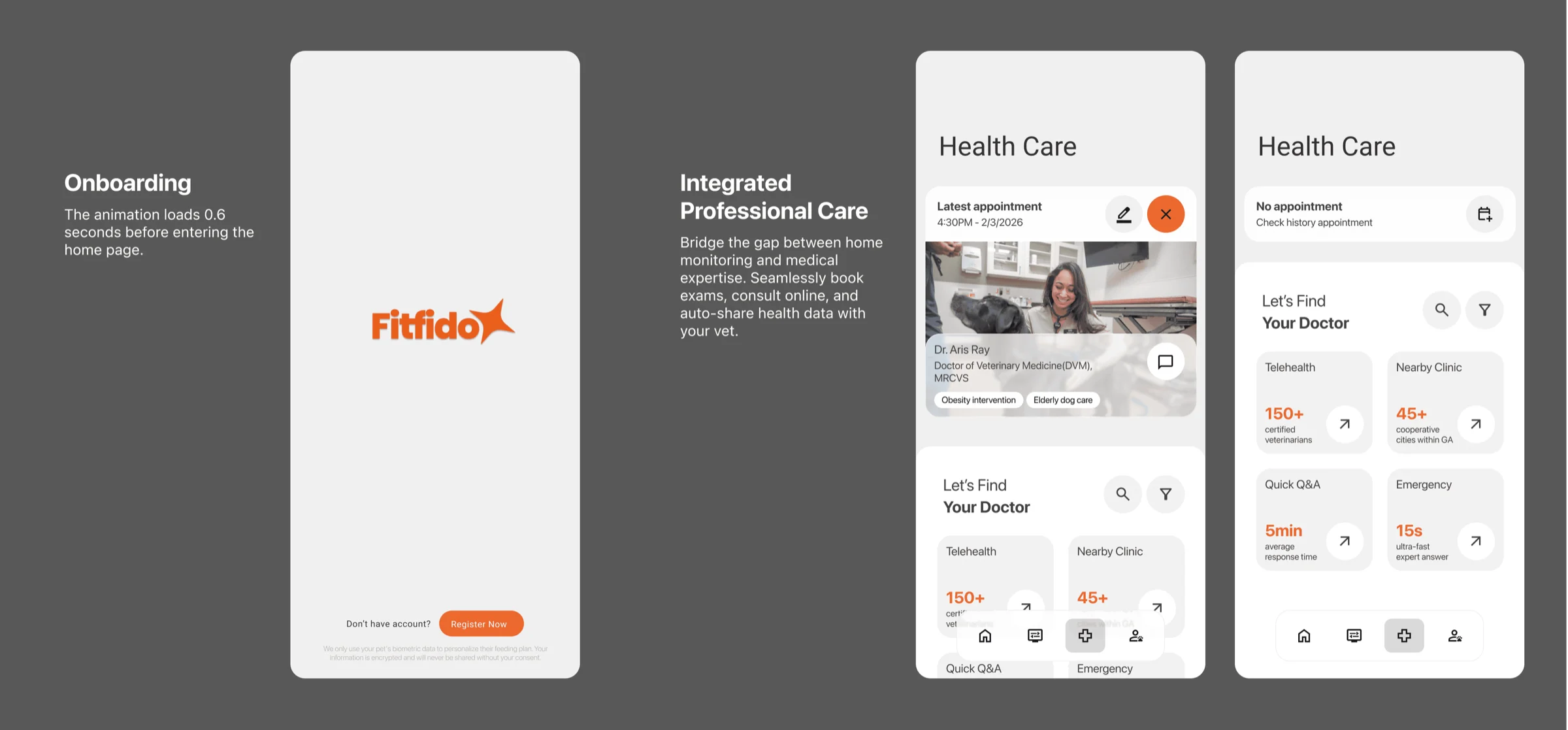
The interface it ended up as. The column beside it is how each screen got there.
01
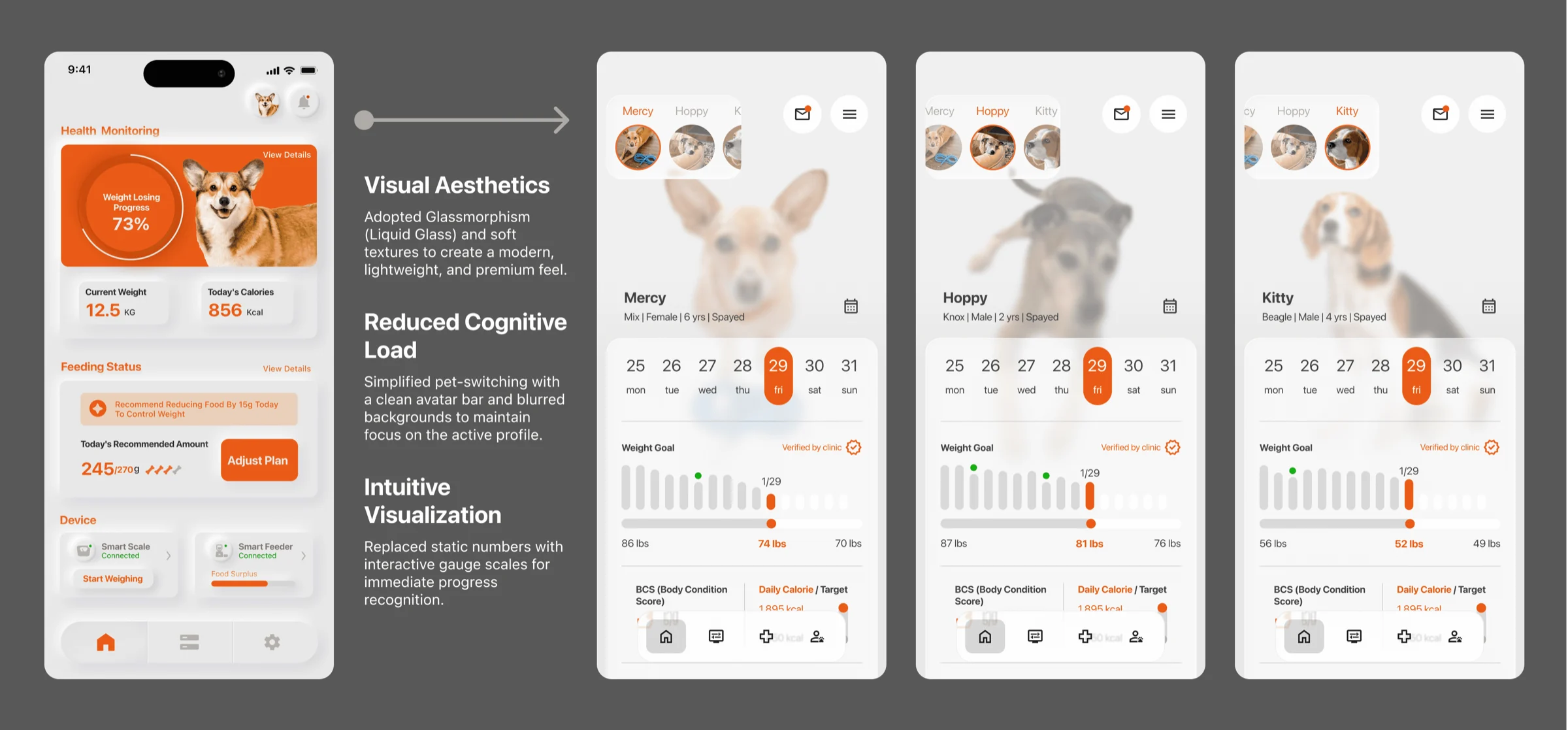
02
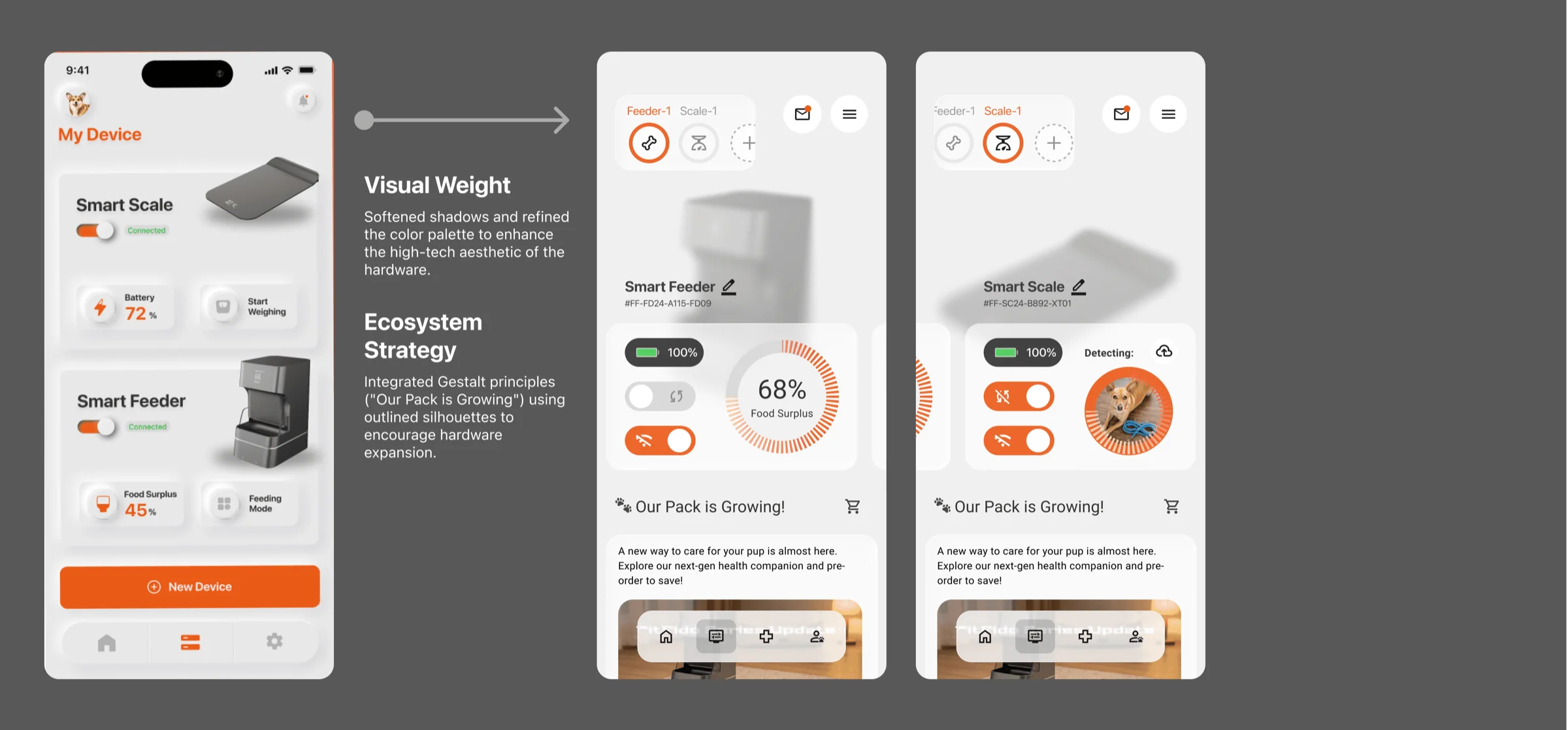
03
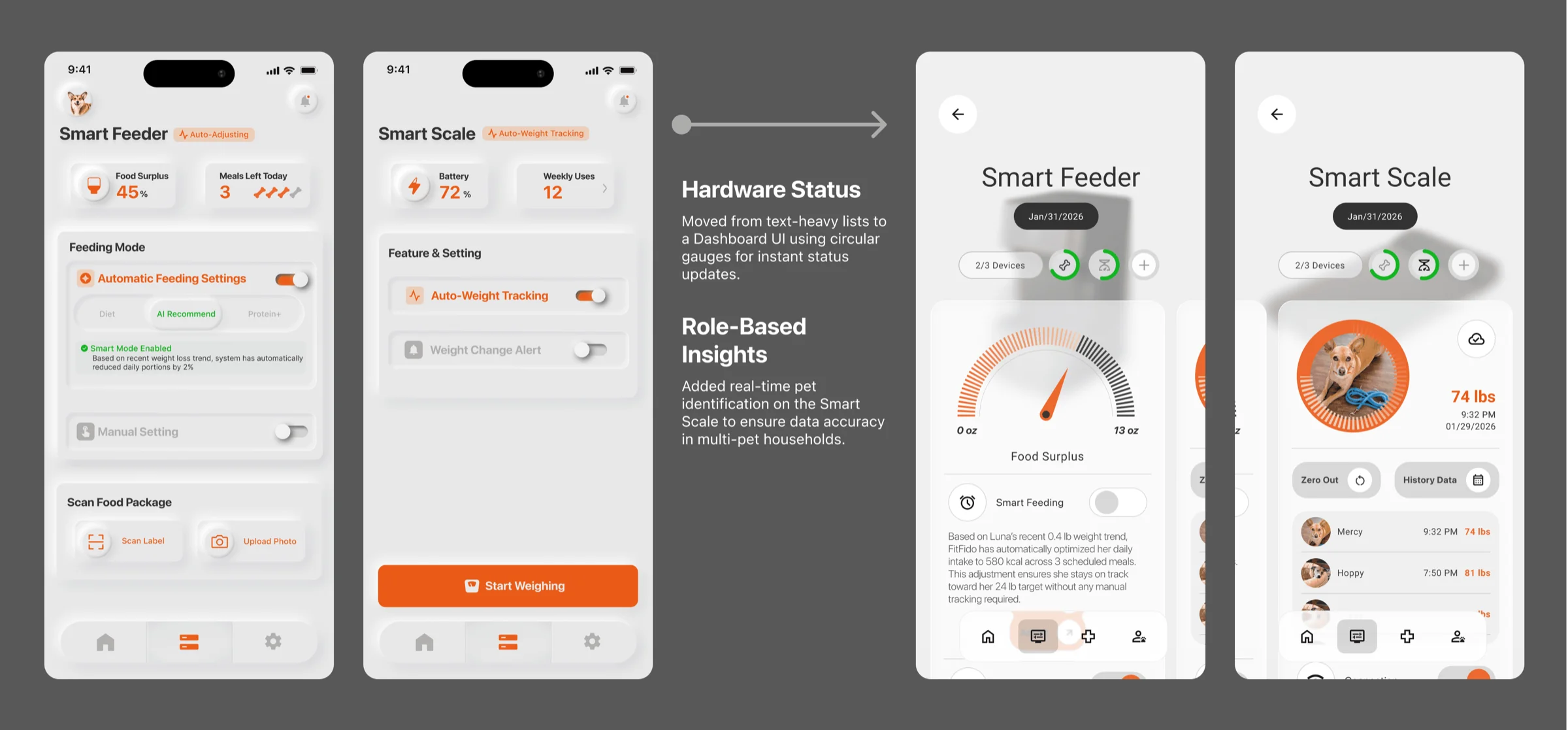
04
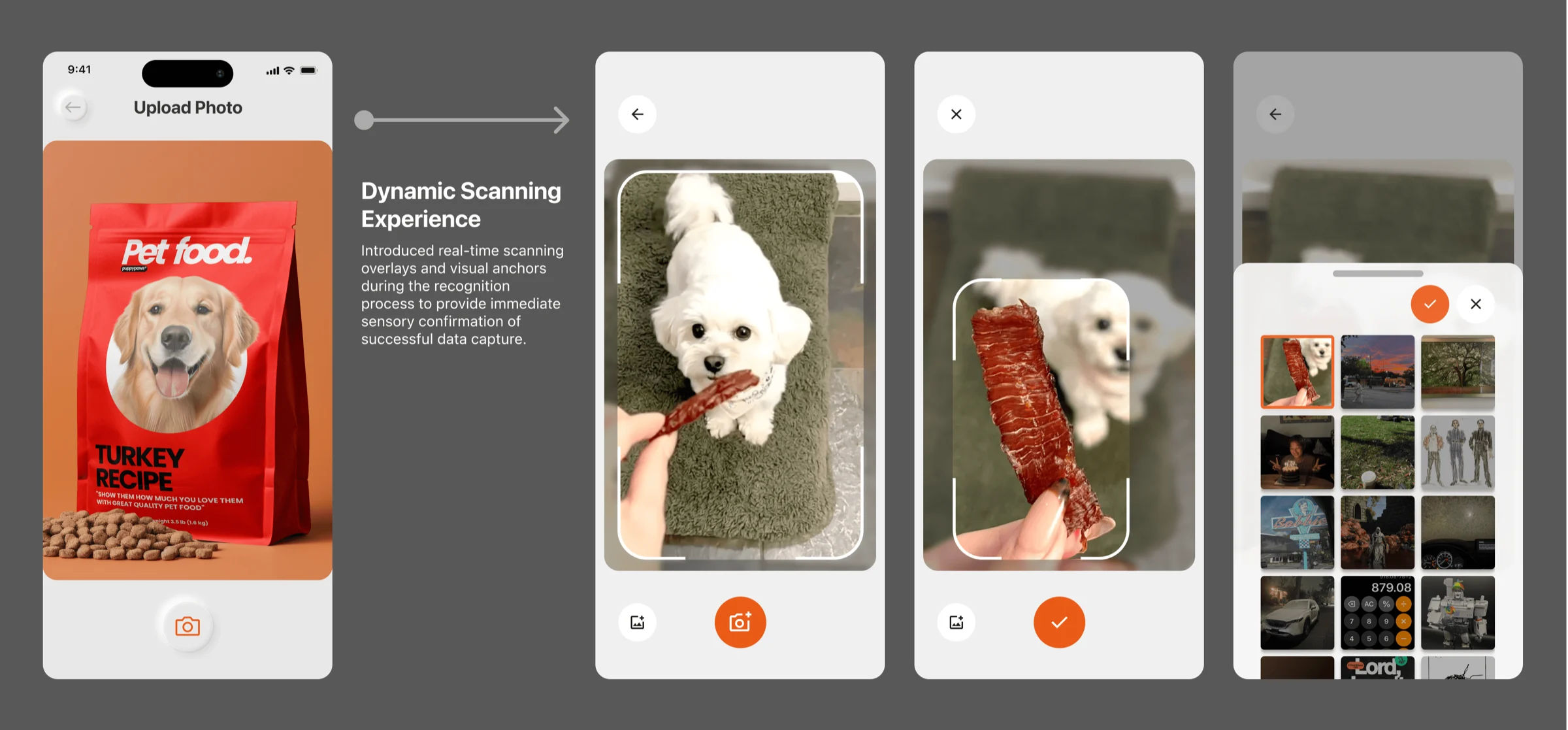
05
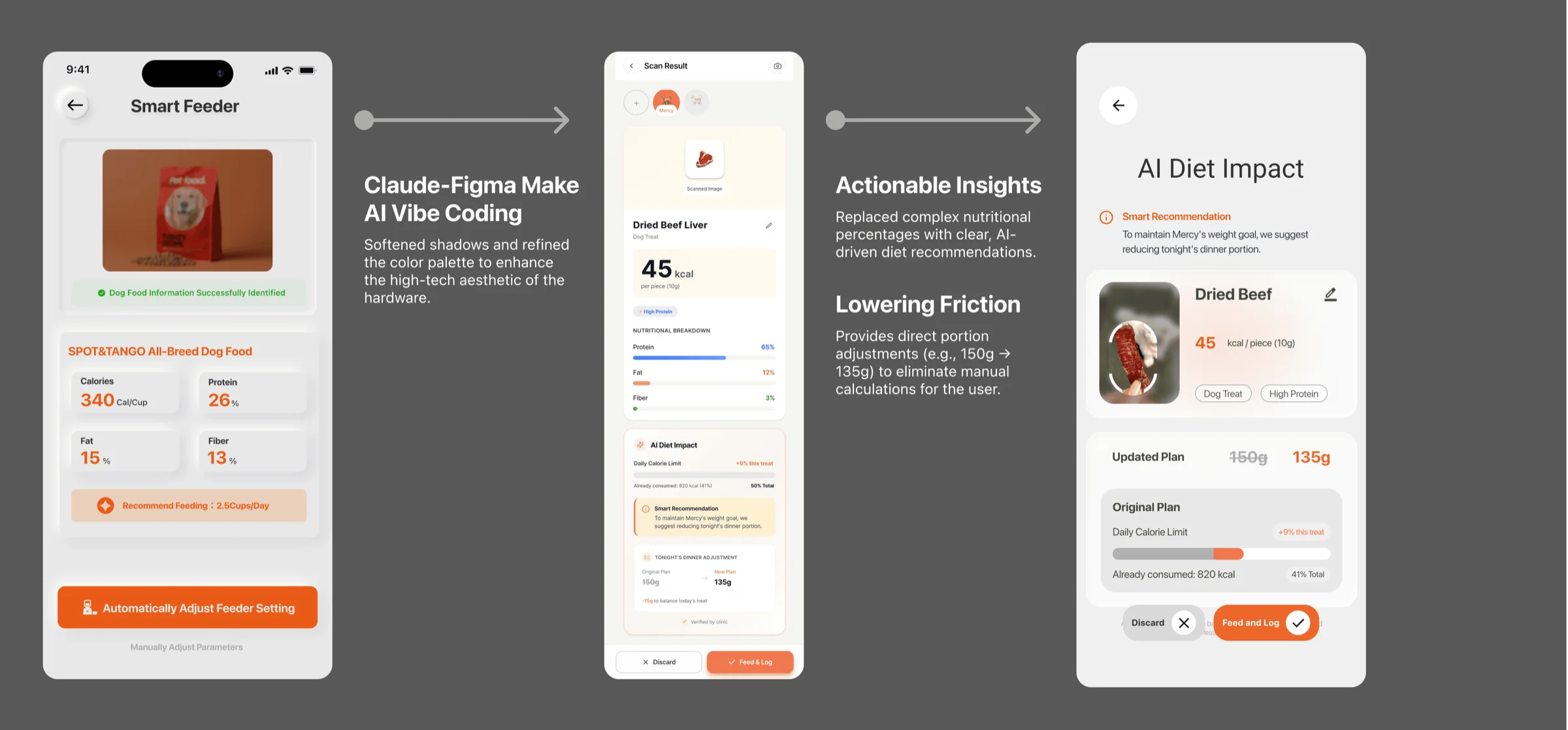
06
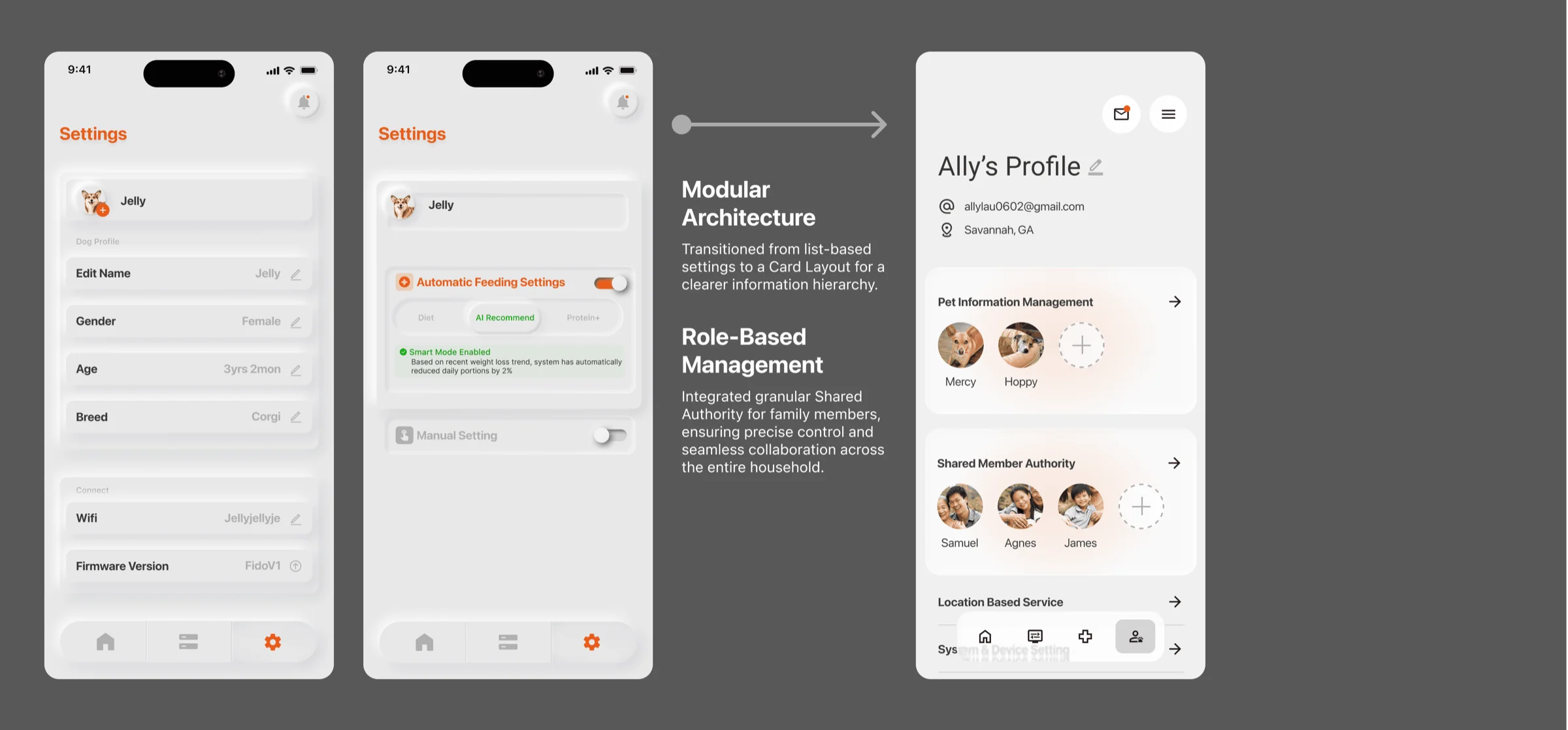
07
Reflection
From “dog training product” to “dog weight management system”.
When the challenge is narrowed down, the path of design naturally emerges.
As a User Experience Designer, this project reinforced the importance of uncovering genuine user needs instead of defaulting to existing product solutions. By grounding decisions in data and ongoing research, and by testing outcomes iteratively, we can create products with real potential.
Data is only as valuable as the insights it yields. Through user interviews, I discovered that the barrier to pet health wasn’t a lack of care, but cognitive load. This realization shifted our solution from a tracking tool to an automated system, proving that true innovation comes from solving the underlying behaviour, not just the surface symptoms.
Impact
Three international design awards.